Andy Greaves, Sales Director at TVC Technology Solutions Ltd, outlines the many benefits offered to care home residents and staff alike by modern audio-visual technology.

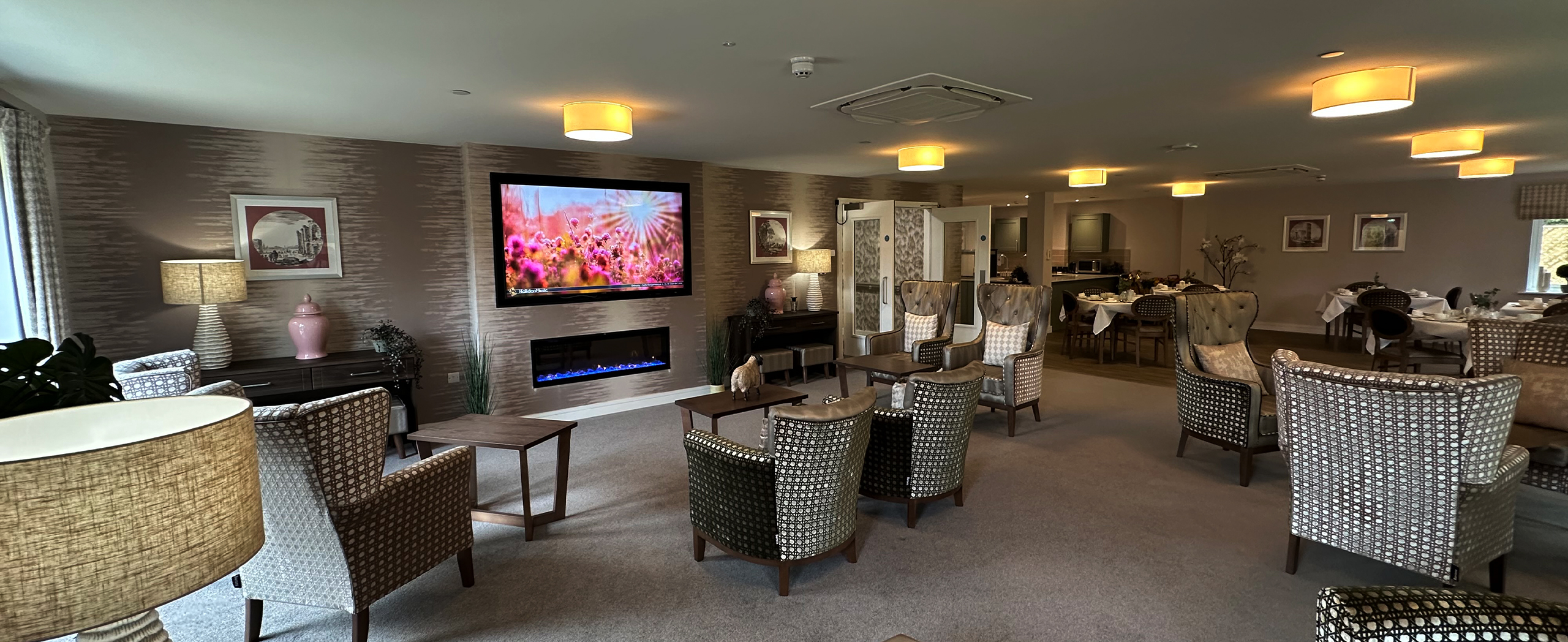
Walk into a progressive UK care home today, and behind the smiles in the lounge and the lively chatter at the dining table, discreet technology is enhancing wellbeing, easing staff workloads, and giving managers cost-effective tools to elevate the resident experience. Modern audio-visual installations have moved far beyond the days of a single corner television or a crackly PA system. They now encompass purpose-built hospitality TVs, interactive displays, digital audio, control systems and digital signage.
Yet, the difference between consumer-grade AV equipment and care-home environment-tailored solutions is night and day.
Standard domestic TVs, often purchased online, may only come with a consumer warranty that becomes void the moment they’re used commercially. By contrast, hospitality or semi-hospitality TVs are specified for round-the-clock, multi-user environments, backed by proper commercial warranties.
Here at TVC Technology Solutions, we often use our partner Mitchell & Brown brand TVs as they come with a 7-year warranty, even in a commercial environment like a care home.
It is not just a benefit for the longevity and up-time of the TV, but the seven-year guarantee period allows managers to depreciate the asset with peace of mind that unexpected replacement costs won’t blindside their budgets.
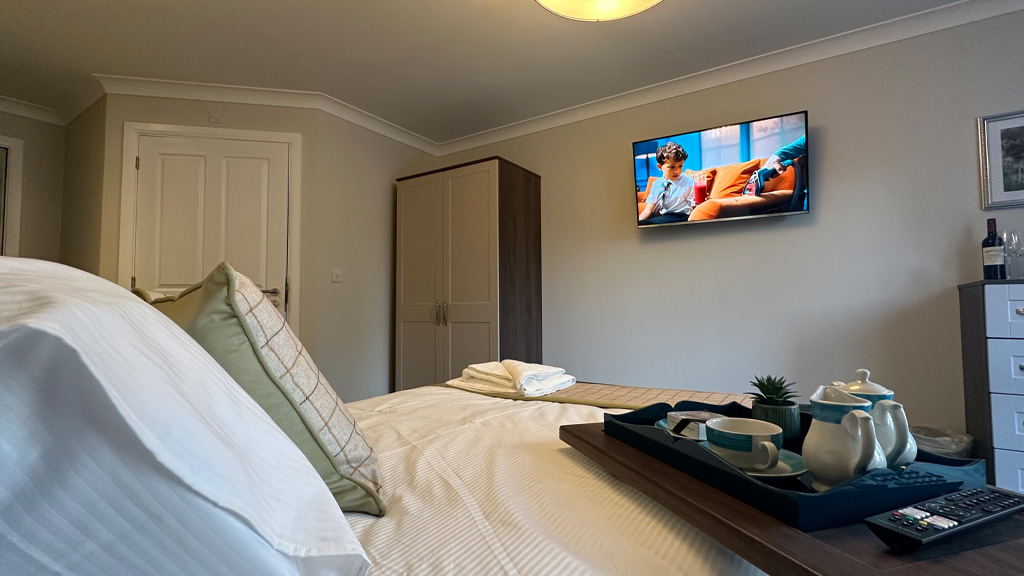
Hospitality screens also bring features that both residents and carers appreciate, such as volume-limit options, welcome messages that greet residents by name, and intuitive interfaces that reduce confusion. Ergonomic accessories like the Mitchell & Brown Big Button Remote allow even frail or visually impaired residents to navigate TV channels without frustration. Interactive displays and IPTV solutions add another layer of value, whether streaming calming visuals, daily news, or video calls with family, or enabling collaborative games like chess and digital jigsaws that foster social interaction between residents.
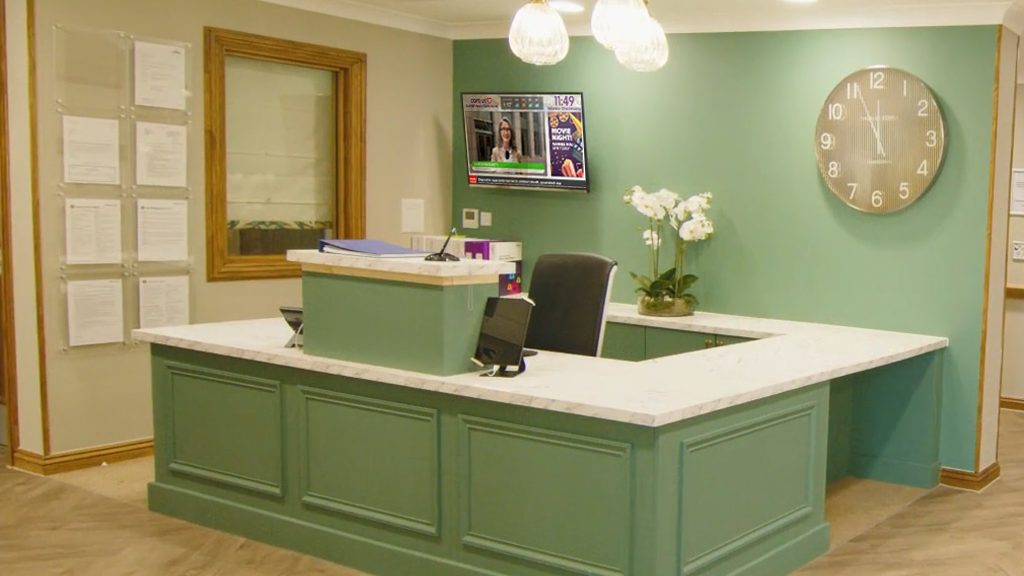
One of the most striking developments in care homes is the rise of bespoke digital signage. MySign’s Digital Noticeboard exemplifies this trend. Installed in common areas or reception spaces, it keeps residents and visitors informed about daily activities, meal menus, or special events such as birthday parties. Weather forecasts, “fact of the day” titbits, and live news feeds connect residents to the wider world, all presented with the home’s own branding for a personalised feel.
For less mobile residents, a dedicated in-house TV channel can replicate these updates right on their room screen. MySign’s cloud-based content management system enables staff and head-office personnel to schedule and update content remotely from any internet-connected PC, ensuring consistency across locations and saving valuable staff time.
Audio inclusivity is equally essential. Hearing loop systems and speakers with enhanced clarity are now a standard expectation in new-build homes, and may even be considered under Care Quality Commission guidelines and the Equality Act 2010. These features make community events, movie nights, or bingo sessions more accessible to those with sensory impairments, fostering inclusivity across the resident population.
Physical installation of AV in care homes is not without its challenges, however. Safety comes first, so secure mounts, tamper-proof housings, and careful cable management are essential to protect both residents and equipment while minimising trip hazards. Older properties can complicate wall mounting or cable runs but experienced engineers will start with detailed site surveys to assess infrastructure and avoid structural risks. Where cabling isn’t feasible due to historic features or listed status, Wi-Fi-enabled televisions such as Freely models offer full broadcast TV and streaming operation without a coaxial aerial or satellite feed.
Installations themselves must also be planned around daily routines, including phased work, quiet tools, and close coordination with staff to respect meal times, activities, or rest periods. Dementia care areas, in particular, require teams who are sensitive to the emotional and sensory environment.
A good plan and installation will also encompass a solid degree of future-proofing. Running additional conduit and cabling during initial installation or choosing modular hardware can save significant disruption later down the line. As standards and AV technology for care homes evolve, homes that have planned ahead can upgrade seamlessly rather than endure another round of invasive works.
Running additional conduit and cabling during initial installation or choosing modular hardware can save significant disruption later down the line. As standards and AV technology for care homes evolve, homes that have planned ahead can upgrade seamlessly rather than endure another round of invasive works.
Beyond the technicalities, the financial conversation is a major consideration given the often-narrow margins of care home profitability. In today’s cost-conscious sector, we would always suggest that long-term value trumps the lowest upfront price.
Hospitality-grade equipment that withstands constant daily use reduces maintenance costs and interruptions, and resident-use equipment like TVs with lengthy commercial warranties is essential to avoid early additional costs. Centralised control systems that allow one staff member to adjust TVs and content across multiple rooms or displays cut down on time spent in programming and troubleshooting individual screens.
Engaging content and inclusive audio solutions contribute tangibly to wellbeing, but they do have a cost associated with them that must be factored in. Training and aftercare are equally important parts of the value equation. Even the most intuitive systems benefit from structured handovers, cheat sheets and simply user guides. Skilled integrators like TVC deliver tailored training after installation so that carers and managers understand controls, settings, and basic troubleshooting.
Given the high staff turnover common in the sector, ongoing support is equally critical. Service contracts can include remote monitoring, phone support, and scheduled maintenance visits. This partnership approach ensures managers can trust their technology will perform consistently, with a degree of future-proofing, rather than adding to their workload.
The integration of safety technologies within the AV architecture can also provide an additional benefit to care homes. Many AV providers now collaborate with partners offering fall-detection solutions or motion-sensing cameras. These subtle tools can alert staff to potential incidents without compromising residents’ dignity or privacy.
For many managers, though, the world of modern AV remains unfamiliar. They know improvements are possible, but may be unsure where to start. A trusted integrator begins with consultation, listening to the home’s specific goals and requirements. Is it upgrading lounge spaces, modernising in-room TVs, or adding safety features, for example? The integrator should then create and present a clear, jargon-free proposal.
We find that the sheer breadth of options often surprises clients.
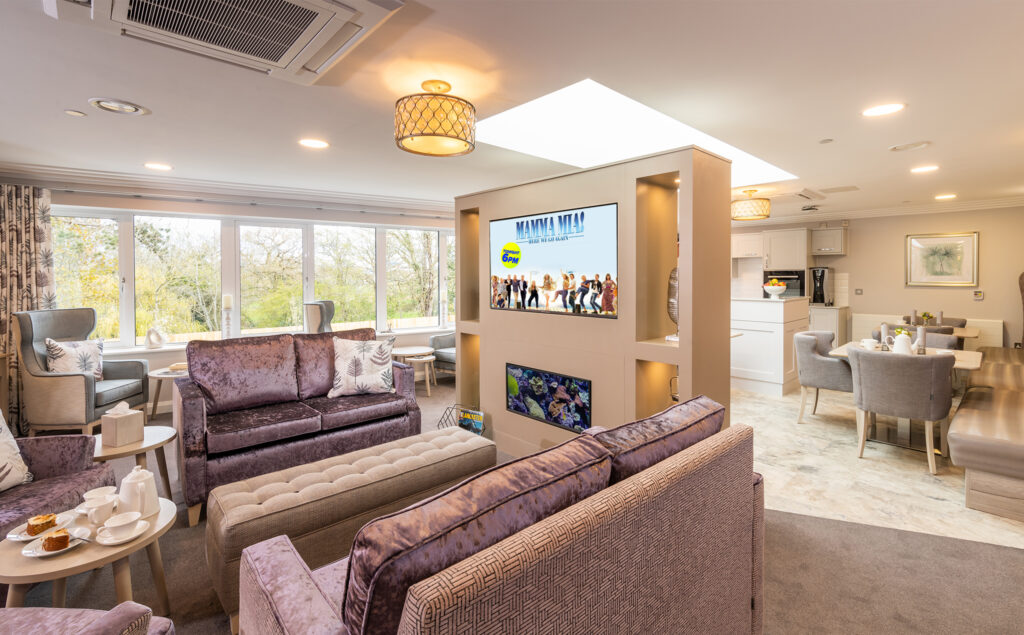
In an era where families research online reviews and regulators emphasise quality of life, creating a vibrant, connected environment within the home is a real differentiator. A communal lounge with a large-format display can host a range of events from classic film afternoons to virtual tours of historic landmarks. Personalised TV channels can share photos from recent garden parties or reminders about flu-jab clinics. Digital noticeboards can highlight birthdays or upcoming entertainment, reinforcing a sense of community. Dedicated hospitality featured TVs with simplified menus and large button remote controls can preserve dignity and independence.
We have also found that the technology also strengthens links with families. Video-calling capability built into IPTV systems or interactive displays enables loved ones to “drop in” virtually for a chat or to share milestones, even when travel is difficult. In turn, families gain confidence that their relatives remain engaged and well cared for.
As sustainability becomes a sector-wide priority, efficient AV can also contribute here. Centralised controls and scheduled power management reduce energy waste and reliable equipment that lasts seven years or more reduces landfill waste. For groups operating multiple sites, remote content updates eliminate the need for paper notices and reduce the need for travel between homes.
In an era where families research online reviews and regulators emphasise quality of life, creating a vibrant, connected environment within the home is a real differentiator. A communal lounge with a large-format display can host a range of events from classic film afternoons to virtual tours of historic landmarks. Personalised TV channels can share photos from recent garden parties or reminders about flu-jab clinics. Digital noticeboards can highlight birthdays or upcoming entertainment, reinforcing a sense of community. Dedicated hospitality featured TVs with simplified menus and large button remote controls can preserve dignity and independence.
We have also found that the technology also strengthens links with families. Video-calling capability built into IPTV systems or interactive displays enables loved ones to “drop in” virtually for a chat or to share milestones, even when travel is difficult. In turn, families gain confidence that their relatives remain engaged and well cared for.
As sustainability becomes a sector-wide priority, efficient AV can also contribute here. Centralised controls and scheduled power management reduce energy waste and reliable equipment that lasts seven years or more reduces landfill waste. For groups operating multiple sites, remote content updates eliminate the need for paper notices and reduce the need for travel between homes.
A practical example illustrates how these pieces come together. Consider a multi-site operator rolling out Digital Noticeboards across its portfolio. Branding, activity schedules, menus, and local weather forecasts are updated centrally each morning. In communal lounges, hearing loop systems ensure that even those with the most severe hearing loss can enjoy movie nights. In residents’ rooms, TVs display the same channel of birthday photos or announcements through the home’s technology. Staff, freed from the repetitive task of updating paper posters or adjusting individual TVs, can focus on direct resident interaction.
Managers, knowing their longer warranty screens are protected well into the future to avoid unexpected capital outlays, and the overall environment feels more modern, connected, and caring.
Care homes exploring AV upgrades need not have all the answers upfront. The key is to engage a partner experienced in both healthcare and hospitality sectors, one who understands the nuances of live-in environments, sensitive resident groups, and regulatory expectations. The right integrator will guide them through design, installation, training, and long-term support to ensure the technology is a help, never a hindrance.
As the UK’s care landscape evolves, expectations are rising. Families and regulators seek homes that balance compassion with professionalism. Residents, increasingly familiar with tablets and streaming services, anticipate more than a fuzzy television in the corner. Modern AV delivers on these expectations. It safeguards residents and equipment, enriches wellbeing, and eases workloads. For owners and managers weighing capital investments, it offers a rare win-win: a measurable operational benefit and a profound human one.
The message is clear: audio-visual technology is no longer a “nice-to-have” in residential care. It is a cornerstone of quality living environments, enabling care homes to connect, inform, entertain, and protect. By adopting robust hospitality-grade equipment, embracing interactive signage, and committing to staff training and ongoing support, UK care homes can create vibrant, future-proof spaces where residents thrive and staff flourish.
In a competitive market where reputation and resident happiness are paramount, modern AV may be the smartest investment a care home can make.
A practical example illustrates how these pieces come together. Consider a multi-site operator rolling out Digital Noticeboards across its portfolio. Branding, activity schedules, menus, and local weather forecasts are updated centrally each morning. In communal lounges, hearing loop systems ensure that even those with the most severe hearing loss can enjoy movie nights. In residents’ rooms, TVs display the same channel of birthday photos or announcements through the home’s technology. Staff, freed from the repetitive task of updating paper posters or adjusting individual TVs, can focus on direct resident interaction. Managers, knowing their longer warranty screens are protected well into the future to avoid unexpected capital outlays, and the overall environment feels more modern, connected, and caring.
Care homes exploring AV upgrades need not have all the answers upfront. The key is to engage a partner experienced in both healthcare and hospitality sectors, one who understands the nuances of live-in environments, sensitive resident groups, and regulatory expectations. The right integrator will guide them through design, installation, training, and long-term support to ensure the technology is a help, never a hindrance.

For a quick and easy way to find out about the latest TVC news, case studies and offers.